







Expert Perspectives - Dermaplaning Explained: What It Does to Your Skin and What to Know Before You Start
Share

Dermaplaning Explained: What It Does to Your Skin and What to Know Before You Start
By Ilija Kelepurovski, MD — Specialist Urologist
Dermaplaning has moved from clinic treatment rooms to bathroom counters, helped along by beauty creators and before-and-after videos. The idea sounds simple enough: a fine blade, a few light strokes, and the peach fuzz and dull top layer are gone. This guide separates what is well established from what's a fair cosmetic expectation and what's just marketing.
What is dermaplaning?
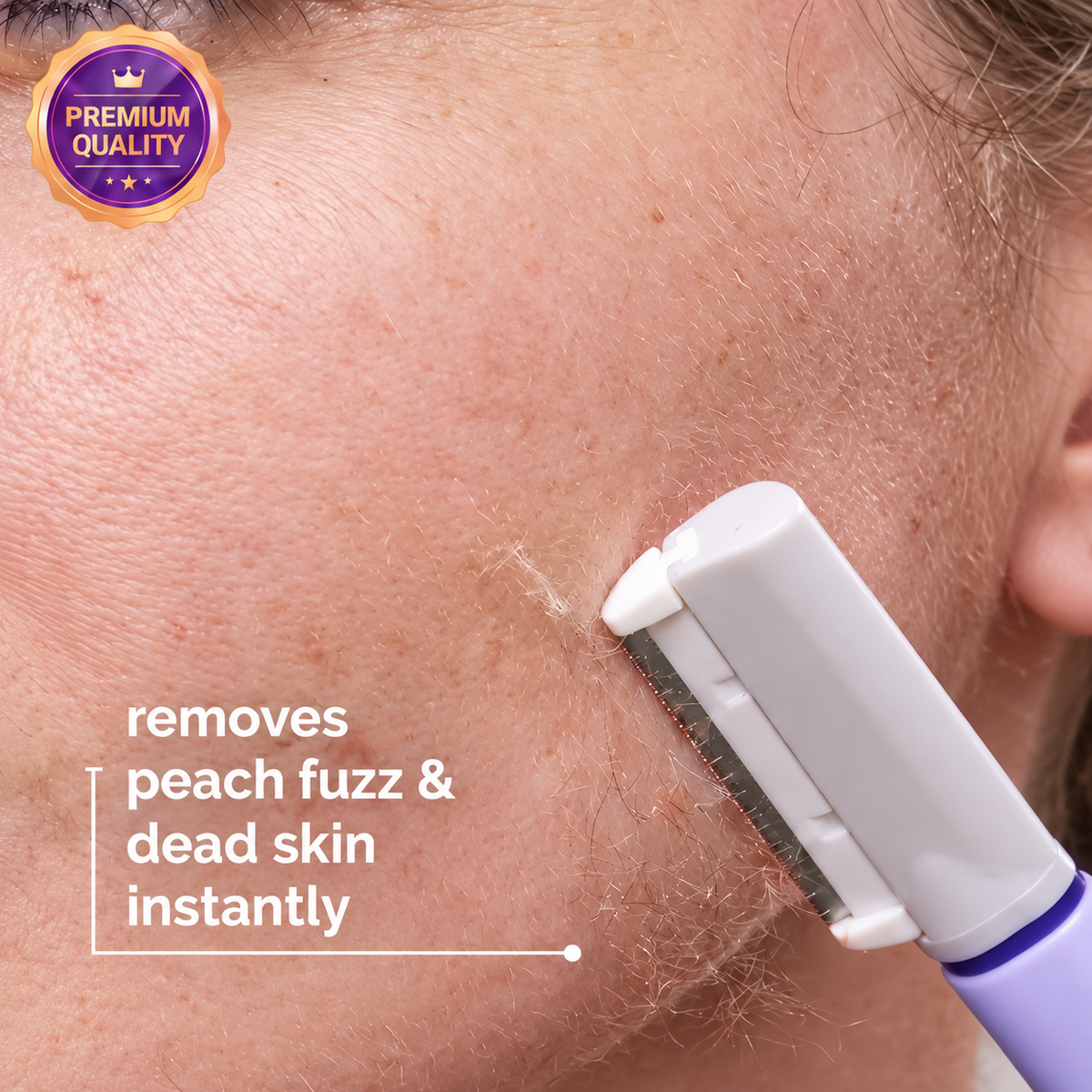
Dermaplaning is exfoliation with a blade. A fine edge, drawn lightly across the face at a shallow angle, does two jobs at once. It cuts vellus hair, the short, soft, usually pale hair most people call peach fuzz (Cleveland Clinic). And it lifts loose cells off the stratum corneum, the skin's outer layer of flattened dead cells that your body sheds anyway.
The same name is also used for deeper medical resurfacing procedures, so claims about scars or wrinkles don't necessarily apply to cosmetic dermaplaning (Cleveland Clinic).
What happens to your skin during dermaplaning?
Cosmetic dermaplaning works mainly on the outermost surface of the skin. The blade cuts hair at skin level and leaves the follicle, the structure under the skin that actually grows the hair, alone. When performed correctly, cosmetic dermaplaning primarily removes superficial dead skin cells.
Dermaplaning doesn't restructure skin or repair damage. The stratum corneum is also your main barrier against water loss and irritants, so taking off too much causes redness and stinging.
Dermaplaning benefits: what can you reasonably expect?
Clinical evidence supporting the broader benefits of dermaplaning remains limited. A 2011 systematic review of dermaplaning and similar treatments called the evidence "scarce, anecdotal, and not well documented," even though plenty of patients and clinicians were happy with the results (Pryor et al., 2011). Good trials of at-home devices are hard to find.
So treat what follows as realistic cosmetic expectations rather than proven outcomes:
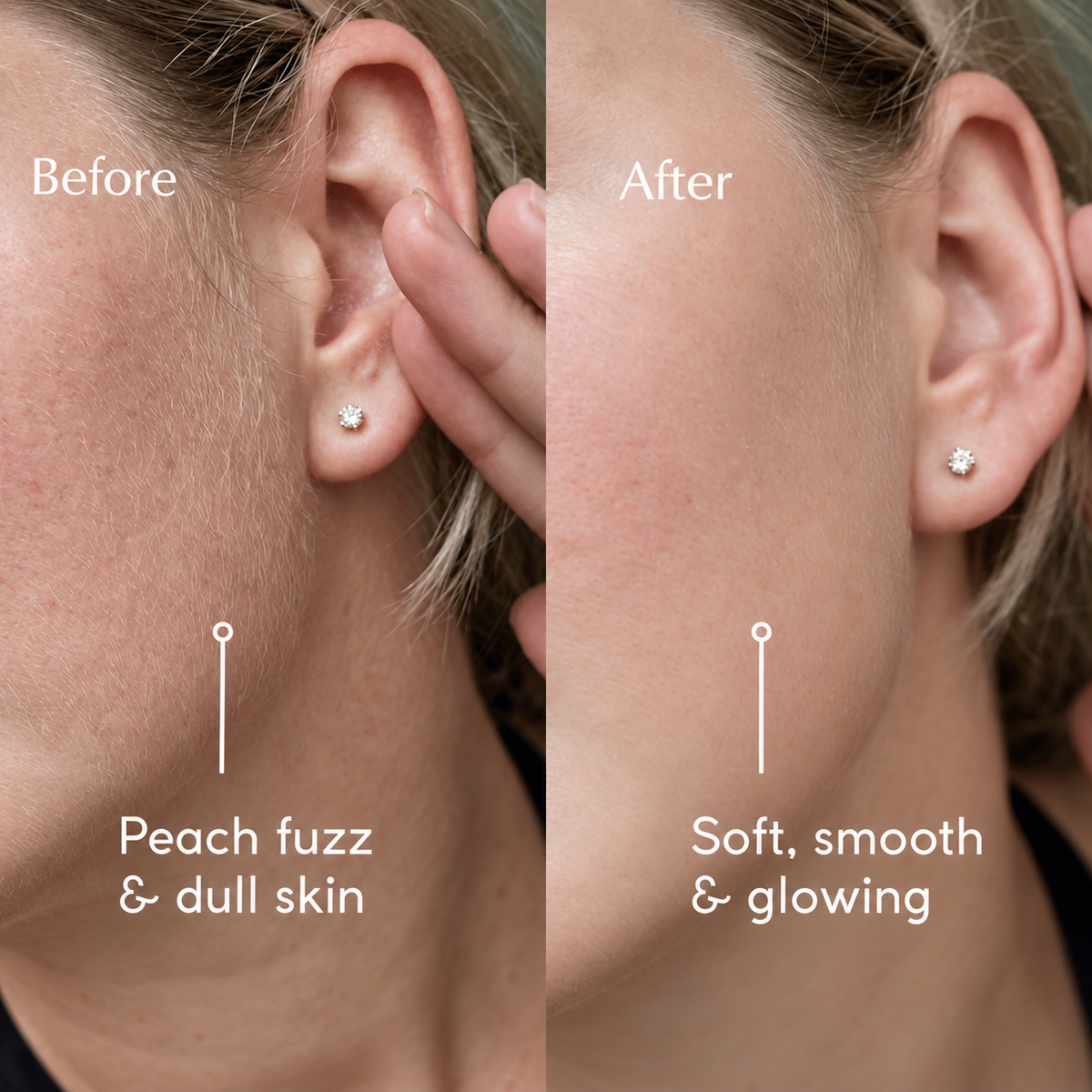
• Skin that feels smoother right away.
• Less visible peach fuzz.
• Makeup that may go on more evenly.
• A few days of fresher, more even-looking skin.
These effects are temporary and fade gradually as hair regrows and the outer layer renews, which is why people repeat the treatment.
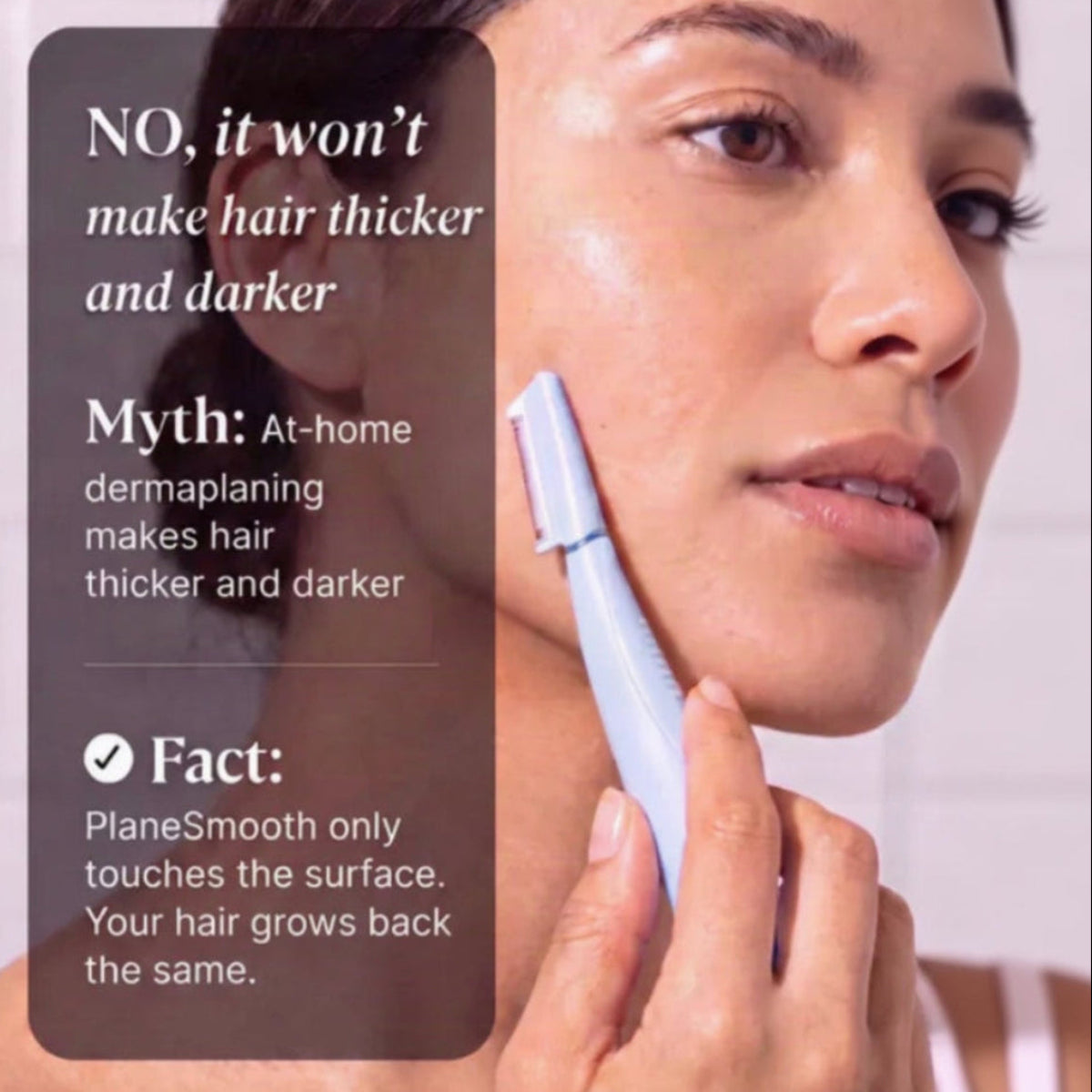
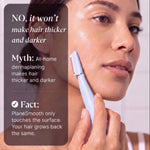
Does dermaplaning make facial hair grow back thicker or darker?
No. How thick and how dark a hair is gets decided in the follicle, under the skin, and the blade never gets there. The part above the surface isn't living tissue, so cutting it doesn't send any message back to the root.
The direct evidence is old, small and based on shaving in men, but it points the same way. In a 1970 study, five men shaved one leg every week for months, and that leg's hair grew back no heavier, wider or faster than the other's (Lynfield and Macwilliams, 1970). A dermaplaning blade cuts hair the same way a razor does.
So why does regrowth sometimes feel rough? A hair that's never been cut tapers to a soft point. A cut one comes back with a blunt tip, which can feel slightly stubbly for a few days. The hair itself is no thicker than before.
Is dermaplaning safe for everyone?
For most people with healthy skin who go gently, it's low risk. Things can still go wrong: irritation, small nicks, breakouts, infection, or patches of skin that turn darker or lighter (Cleveland Clinic). Skip it, or check with a dermatologist first, if you have any of these (Cleveland Clinic; AAD):
• Active acne or inflamed spots
• A cold sore, eczema, psoriasis, a rash or a rosacea flare in the area
• Open cuts, wounds or sunburn
• Raised moles, skin tags or other growths (work around them)
• Skin that tends to get dark marks after irritation, which is more common in darker skin tones; go gently
• Current or recent isotretinoin, or a recent peel or laser treatment; ask your prescriber or dermatologist first
Dermaplaning is meant for peach fuzz. A few dark, coarse hairs on the chin or upper lip are common and usually normal. But if coarse hair is spreading to new areas, or it comes with irregular periods, acne or thinning hair on your scalp, see a doctor. Those can be signs of a hormonal condition, most often polycystic ovary syndrome (PCOS) (Endocrine Society, 2018).
How often should you dermaplane?
There's no evidence-based schedule. Clinics usually space professional sessions four to six weeks apart, which is roughly how long the hair takes to come back (Advanced Dermatology). For at-home use, Cleveland Clinic dermatologist Melissa Piliang, MD, says she wouldn't go more than once a week, so the skin has time to recover (Cleveland Clinic). If you notice redness, stinging or new breakouts, give it longer.
What to do before and after
Before
• Start with clean, completely dry skin, unless your device's instructions recommend otherwise.
• Use a clean, sharp blade, don't share it, and replace it when the maker says to.
• Think about pausing retinoids and exfoliating acids for a few days beforehand; they make skin more reactive (AAD).
During
• Hold the skin taut, keep the blade at a low angle, and use short, light strokes in the direction the hair grows.
• One pass per area is enough; repeat passes are a common cause of irritation.
• Keep away from your eyelids, lips, moles and any broken skin.
After
• Put on a gentle, fragrance-free moisturizer straight away.
• Leave out scrubs, acids and retinoids for a day or two.
• Wear broad-spectrum sunscreen, SPF 30 or higher, every day (AAD).
Seek medical attention for persistent bleeding, significant blistering, increasing pain or signs of infection, such as spreading redness, warmth, pus or fever. Swelling that lasts more than a week also needs a check (Cleveland Clinic).
Professional vs. at-home dermaplaning
|
Aspect |
Professional |
At-home |
|
Blade |
Professional scalpel or specialized blade |
Smaller facial blade, sometimes with a safety guard |
|
Provider |
Trained practitioner |
The user |
|
Skin assessment |
Performed before treatment |
Requires personal judgment |
|
Setting |
Professional treatment environment |
Home |
|
Purpose |
Controlled cosmetic exfoliation |
Cosmetic maintenance and convenience |
At-home devices are for cosmetic upkeep. They don't replace professional care or treat any skin condition.
Three things dermaplaning does not do
1. It doesn't make peach fuzz grow back thicker. The follicle isn't touched, so the hair comes back the same.
2. It isn't, on its own, a treatment for acne, scars or pigmentation. Deep scars and pigmentation need targeted treatments that a surface blade can't provide.
3. More often isn't better. At some point you're removing the barrier layer faster than it can rebuild, and what you get is irritation, not extra glow.
You'll also see claims that it builds collagen, reduces wrinkles or shrinks pores. There's no good evidence for any of that. Clearing loose cells may help a moisturizer spread more evenly, but that doesn't prove products sink in deeper.
The bottom line
Dermaplaning is a simple cosmetic tool. It leaves skin smoother for a while, it doesn't treat anything medically, and the evidence behind its bigger promises is thin. Go in with those expectations and it's easy to decide whether it's worth it for you.
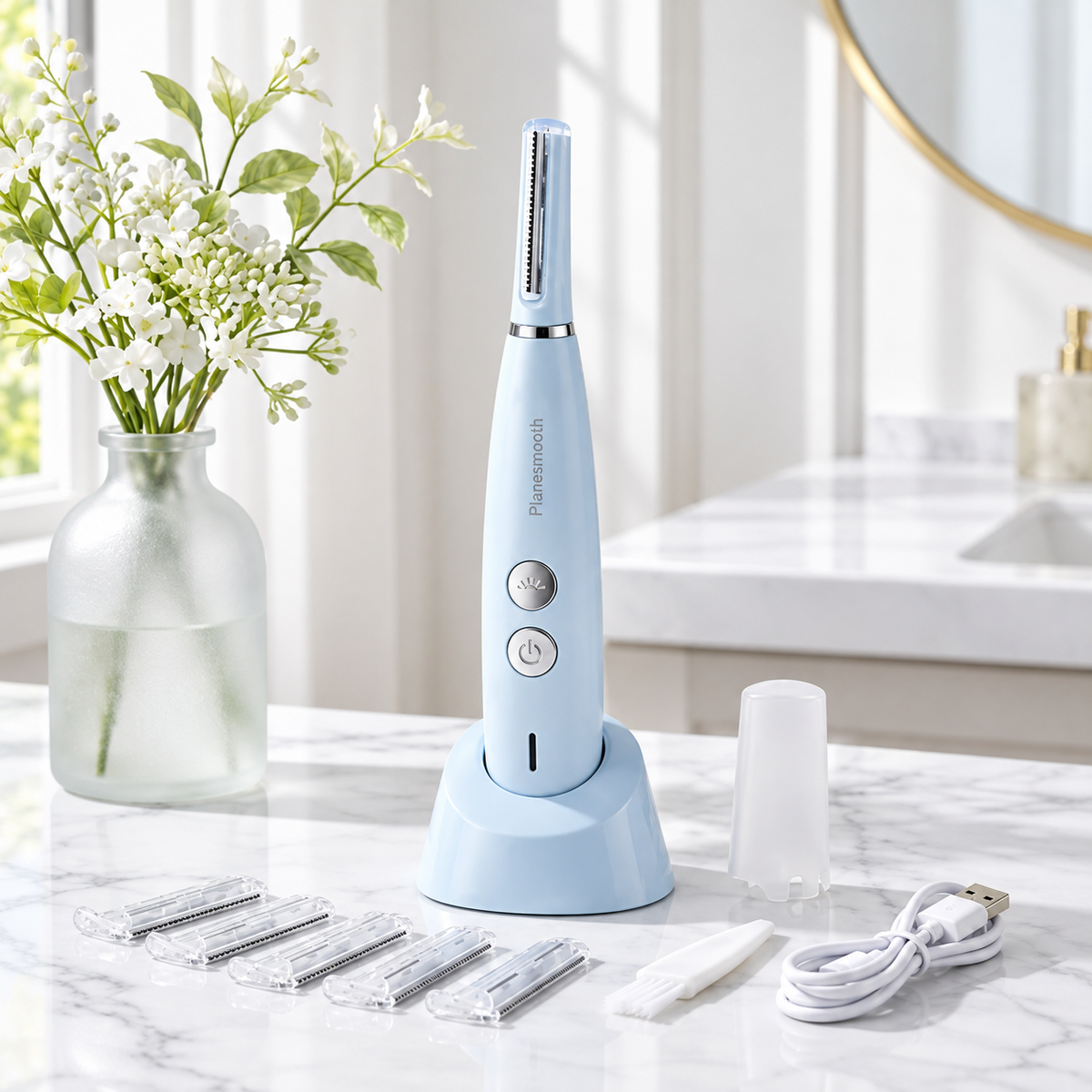
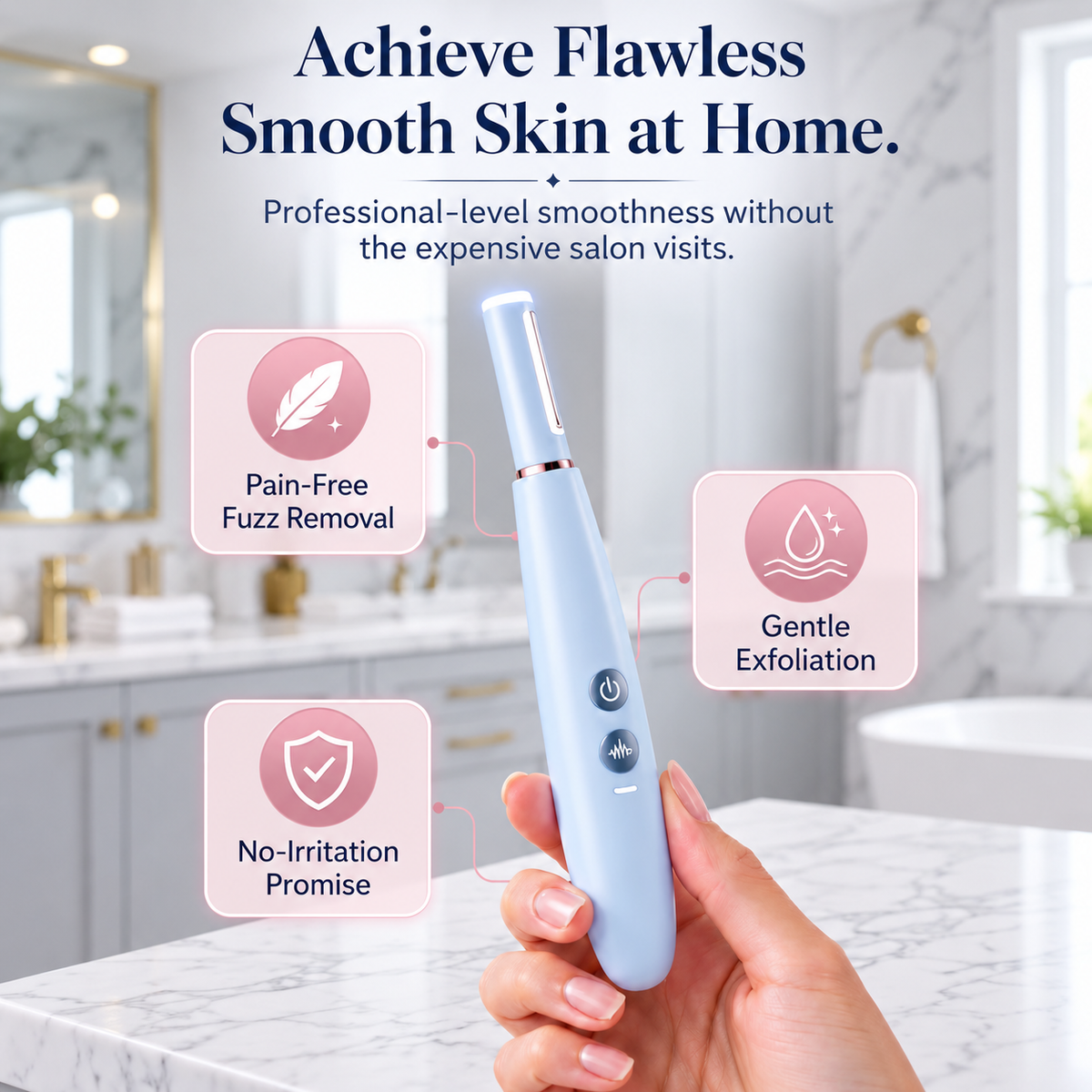
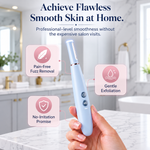
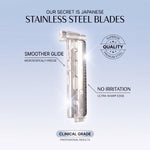
At-home dermaplaning devices such as PlaneSmooth are designed to make cosmetic removal of peach fuzz and surface exfoliation easier to fit into a regular beauty routine. Whatever device you use, technique, blade condition, skin condition and appropriate aftercare matter.
References
1. Pryor L, Gordon CR, Swanson EW, et al. Dermaplaning, topical oxygen, and photodynamic therapy: a systematic review of the literature. Aesthetic Plast Surg. 2011;35(6):1151–1159. doi:10.1007/s00266-011-9730-z
2. Lynfield YL, Macwilliams P. Shaving and hair growth. J Invest Dermatol. 1970;55:170–172. PubMed
3. Endocrine Society. Evaluation and treatment of hirsutism in premenopausal women: clinical practice guideline. 2018.
4. American Academy of Dermatology. How to safely exfoliate at home. Updated February 2026.
5. American Academy of Dermatology. How to select a sunscreen.
6. Cleveland Clinic. Vellus hair (peach fuzz). Reviewed May 2022.
7. Cleveland Clinic. Dermaplaning. Reviewed April 2022.
8. Cleveland Clinic Health Essentials. Dermaplaning at home (expert: Melissa Piliang, MD). June 2022.
9. Advanced Dermatology. Dermaplaning (practice information page).